
March 23, 2026
The Booming Data Center Sector
Investment Accelerates in 2026
Vanderbilts beware. The data center construction and infrastructure buildout is driving an investment surge in the U.S. not seen since the railroad boom nearly 200 years ago.
AI-related investment increased GDP by an annualized rate of 1.3 percent in 2025, according to a January 2026 U.S. Council of Economic Advisers (USCEA) report. By comparison, investment in railroads grew from 0.2 percent of GDP in 1830, to a maximum of 2.6 percent of GDP in 1854, the report noted.
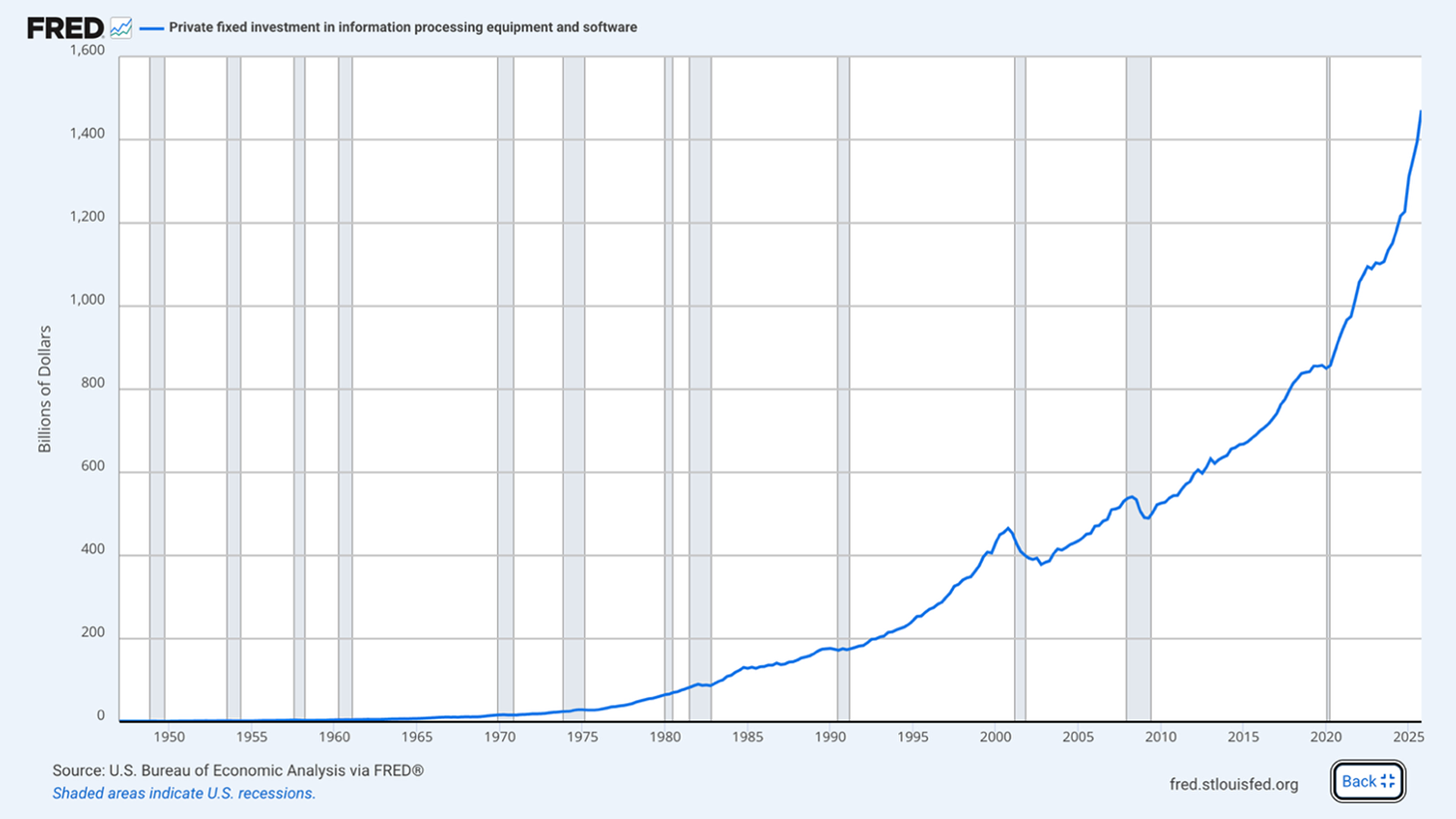
The investment acceleration is striking with an estimated $125 billion annual increase (+28 percent) in investment for information processing and equipment software in 2025 up from single digits the previous year, according to the USCEA report. Information processing equipment and software comprise one quarter of all U.S. investment, the report said.
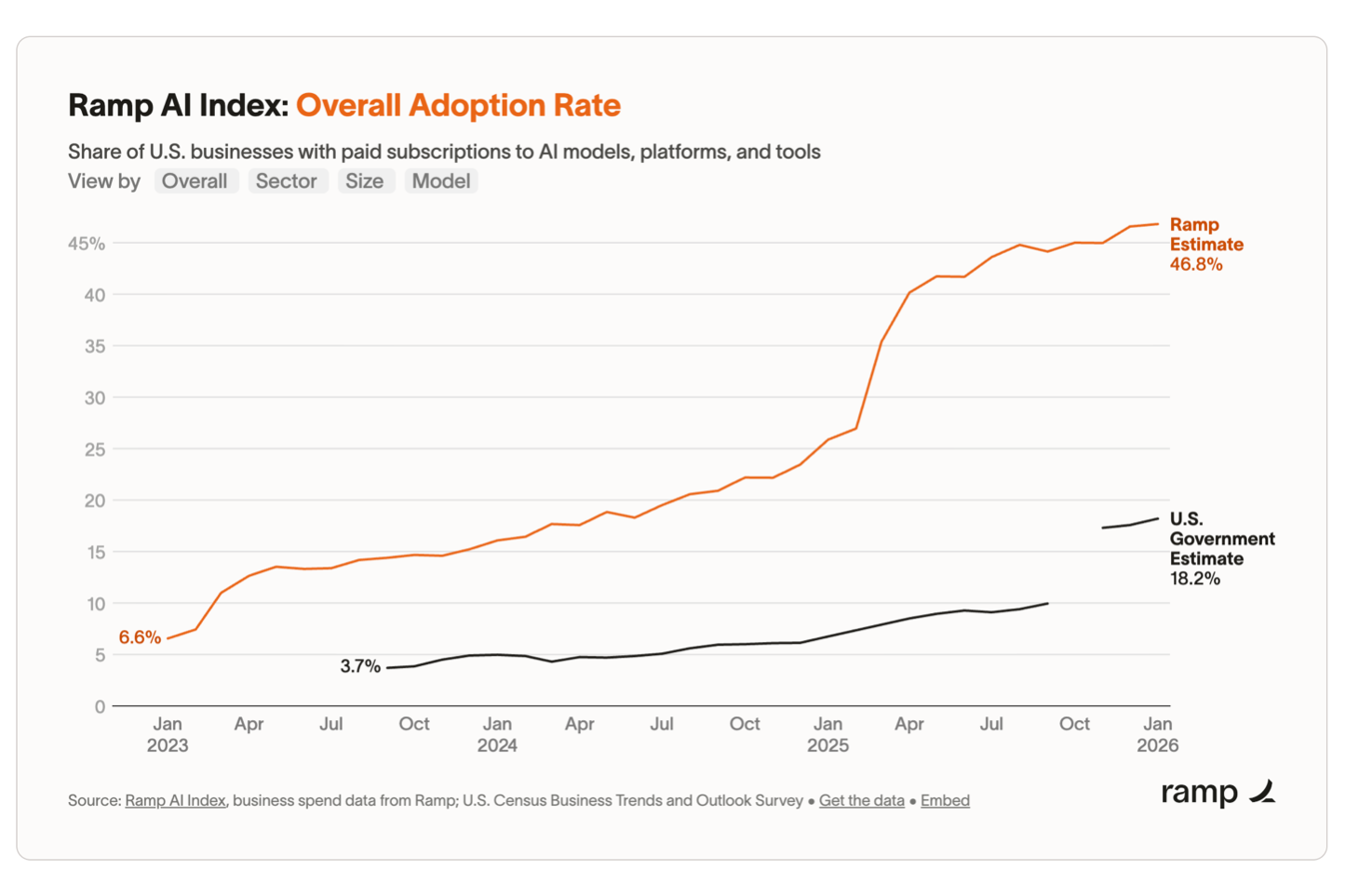
Business adoption is following suit, driving increased demand for artificial intelligent tools. The Ramp AI Index estimates that nearly half (46.8 percent) of U.S. businesses have paid subscriptions to AI models, platforms, and tools. The adoption rate was just 6.6 percent three years ago, according to Ramp, a financial operations platform.
Ludicrous Speed
The North American data center market has transitioned from a period of speculative growth into an era of hyper-accelerated industrialization. For building material companies and suppliers, the current cycle will require scheduling supremacy and on-time optimization for delivering materials that meet or exceed industry standards. This comes, even as requirements will vary depending on factors such as geographic location, resource availability (energy, water, etc.), and local government oversight.
"Speed equals revenue – whoever wins the speed race wins the revenue,” said Sophie Smith, VP Americas, Soben, as part of a 2026 Data Centre Trends Reprot from Soben, part of Accenture. “Businesses still need to track their capex spending, but schedule is the priority over cost at the moment."
Key Takeaway:
In the current high-yield environment, time-to-market is the ultimate competitive differentiator. The industry has reached a tipping point where project schedule holds absolute priority over capital expenditure optimization.
Integrating Modular Industrialized
With speed to market being top of mind, modular construction has the potential to deliver a more timely, standardized assembly model, Soben reports. The thinking is that platform-based designs allow for rapid integration of prefabricated components into a standardized building envelope or shell. Large-scale developments are now executed through capacity blocks of 30MW to 50MW, according to the Soben report.
The report suggests modular integration provides several advantages, including:
- A “Stackable” construction concept with more use of prefabricated elements and modular construction
- Virtual construction using 3D design and BIM to de-risk builds before work starts on site
- Migrating high-value assembly tasks to controlled manufacturing environments, to reduce on-site labor inefficiencies that traditionally stretch project timelines.
One example of this modular approach is the Vertiv "One Core": A standardized, off-the-shelf solution for 5MW to 50MW facilities, integrating mechanical, electrical, and plumbing modules, and racks into a unified delivery framework.
Key Takeaway:
The promise of a standardized, streamlined modular assembly platform will be adopted and tested to meet the demand for data center development. The potential to move high-value assembly tasks into a controlled manufacturing environment could alleviate on-site inefficiencies.
Early Geographic Leaders
Data center starts spending was up nearly 100 percent year over year, and hyperscale centers are becoming more common, according to FMI’s 2026 North American Engineering and Construction Industry Report released in January 2026. Data centers account for more than 25 percent of total nonresidential building construction in some metro markets, the FMI report said. The average cost is now about $987 per square foot, up 50% year over year, according to FMI.
Three states lead the data center market as Louisiana, Virginia, and Texas accounting for about two-thirds of year-to-date starts value, FMI said. Those three states meet a positive mix of access to local power and permitting conditions.
Texas, for instance, has utilized asset repurposing to gain a lead, FMI reports. The 900 megawatt “Stargate” node in Abilene, once slated for a crypto-mining, has pivoted to AI, leveraging early industrial zoning and an 85% property tax abatement to secure environmental permits for natural gas generation, FMI said.
Power availability is and will continue to be a limiting factor for data center expansion as they’re projected to consume from between 7-12 percent of total electricity use by 2023, according to a Berkeley Labs estimate.
Data center adjacent construction, such as power and infrastructure projects, will be an important market aspect. Professionals and businesses expert in navigating transmission interconnection, substations, and utilities with timely field service support and risk management in strategic geographies will be a sought-after commodity, according to FMI.
Key Takeaway:
A growing geographic strategy focuses on areas that provide a simplified path to permitting and, either, access to power or openness to companies bringing their own energy. To succeed, business will need to be adept at navigating local power transmission challenges and provide in-the-field support.
Running on parallel tracks
Artificial intelligence tools are becoming prevalent in the ways of working and living. The demand to have always-on access – delivered without fail – to AI tools is running on a parallel track with historic investment in data center construction. The potential is huge and historic. Building material companies looking to capitalize on this moment and future opportunities will need to approach with time-sensitive solutions, a focus on return-to-service realities, and a path to tap into the potential of new processes and platforms.
'%3e%3ccircle%20id='Ellipse_28'%20data-name='Ellipse%2028'%20cx='27.5'%20cy='27.5'%20r='27.5'%20transform='translate(287%20377)%20rotate(90)'%20fill='%23e31837'/%3e%3cpath%20id='Path_86737'%20data-name='Path%2086737'%20d='M-246.291,558.851l-6.551-6.552a1.441,1.441,0,0,0-2.038,0,1.442,1.442,0,0,0,0,2.039l4.07,4.07h-9.929a1.442,1.442,0,0,0-1.441,1.442,1.441,1.441,0,0,0,1.441,1.441h9.971l-4.071,4.072a1.441,1.441,0,0,0,0,2.038,1.433,1.433,0,0,0,1.019.422,1.433,1.433,0,0,0,1.019-.423l6.51-6.511A1.441,1.441,0,0,0-246.291,558.851Z'%20transform='translate(513.18%20-154.877)'%20fill='%23fff'/%3e%3c/g%3e%3c/svg%3e)
%20rotate(180)'%3e%3ccircle%20id='Ellipse_28'%20data-name='Ellipse%2028'%20cx='27.5'%20cy='27.5'%20r='27.5'%20transform='translate(287%20377)%20rotate(90)'%20fill='%23e31837'/%3e%3cpath%20id='Path_86737'%20data-name='Path%2086737'%20d='M-246.291,558.851l-6.551-6.552a1.441,1.441,0,0,0-2.038,0,1.442,1.442,0,0,0,0,2.039l4.07,4.07h-9.929a1.442,1.442,0,0,0-1.441,1.442,1.441,1.441,0,0,0,1.441,1.441h9.971l-4.071,4.072a1.441,1.441,0,0,0,0,2.038,1.433,1.433,0,0,0,1.019.422,1.433,1.433,0,0,0,1.019-.423l6.51-6.511A1.441,1.441,0,0,0-246.291,558.851Z'%20transform='translate(513.18%20-154.877)'%20fill='%23fff'/%3e%3c/g%3e%3c/svg%3e)
Let’s talk.
Have a specific marketing challenge? Looking for a new agency?
We’d love to hear from you.
